

As you might know from my previous article OoL Time Travel: Journey back 4 billion years to test how life might have started, our team was preparing to head up to 8,200ft (2,500m) and metaphorically four billion years back in time to a place called Bumpass Hell. This is early Earth analog site thought to have features much like those found around the time life could have started.
We survived the rather risky expedition, and the early lab results are streaming in, with some surprises and a conundrum which will be shared in a subsequent article. So, sit back and enjoy the tale of three Astrobiology amigos carrying out experiments at a truly treacherous natural laboratory.
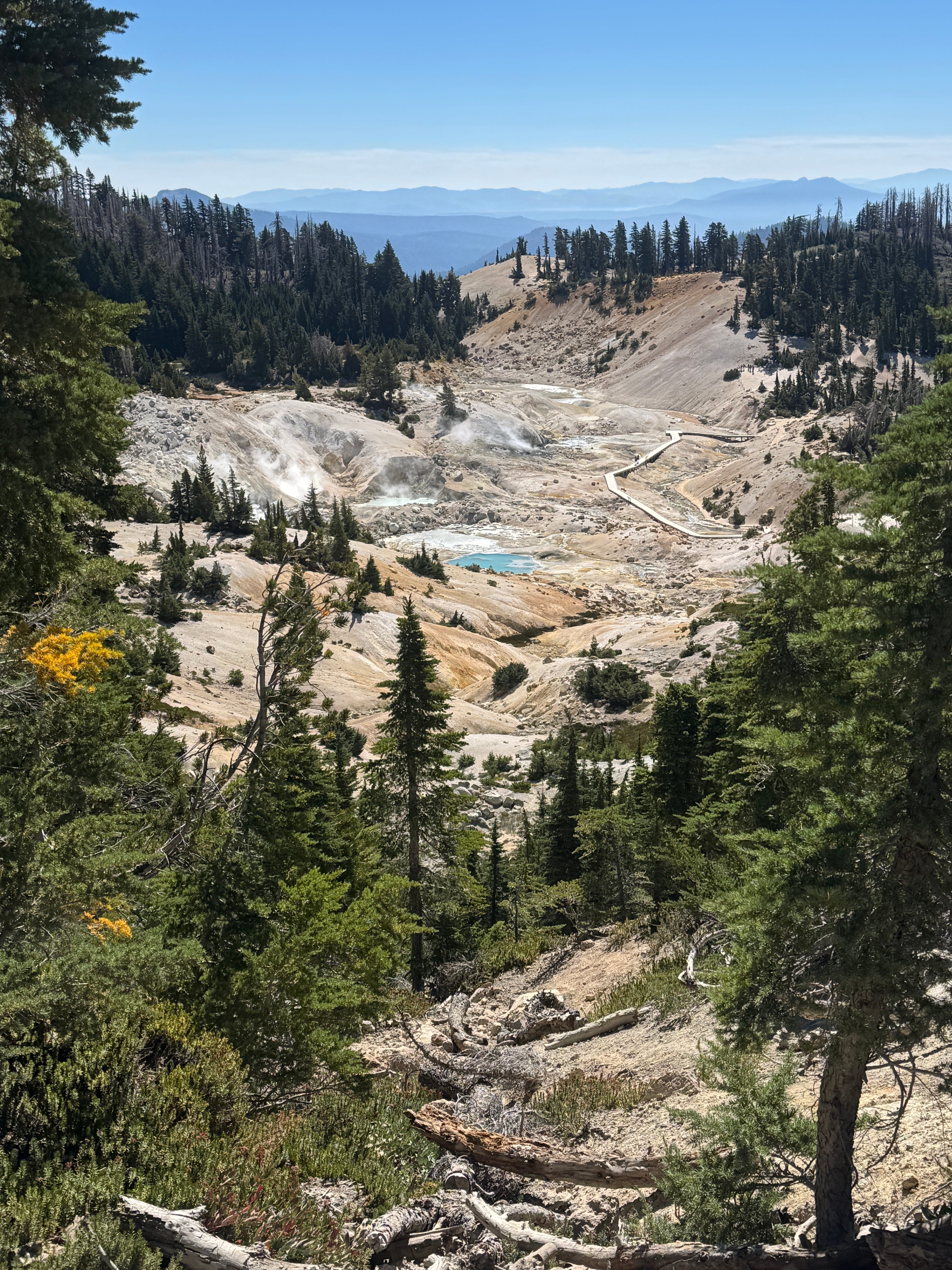
Situated on the flanks of the sleeping but active Mount Lassen volcano in Northern California, this hydrothermal field has served as an excellent scientific field site for decades. It was visited in the late 70s by my colleague at UC Santa Cruz, David Deamer. On this, my fourth visit, the goal was to simulate more realistic chemical and mineral ‘primordial soups’ to test our Hot Spring Hypothesis for life’s origins. Our recipe to cook up solutions in glass vials which could have taken the first steps toward life featured these ingredients: mononucleotides (the building blocks of RNA); lipids (the bricks in the boundary walls of the first primitive ‘protocells’); and minerals including ground up powder of the famous Murchison meteorite, and fresh volcanic ash from a recent eruption in Iceland.
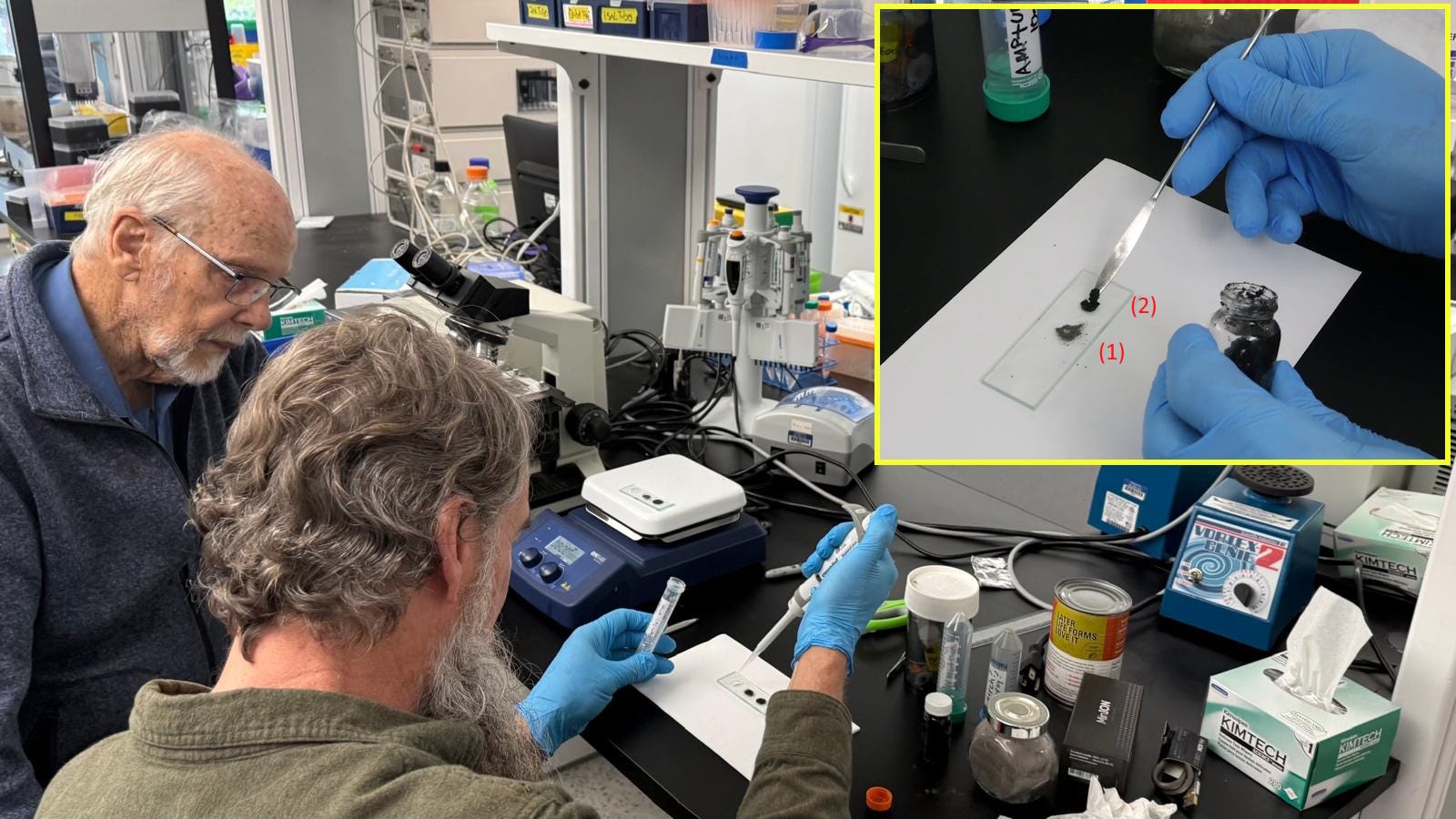
Our team had toiled for months running laboratory experiments and gearing up for the expedition. Along with the meteorite powder and volcanic ash, I wanted to try something completely new in the science of Astrobiology. Because Bumpass Hell is filled with both acidic hot springs and super-hot fumarole gas vents, I aimed to collect both the hot spring water and condensed fluids from the fumarole gases and use both of these to wet-dry cycle the vials. In lab testing and previous hot spring experiments at analog sites all over the world (Yellowstone and Fly Geyser in the US, Rotorua New Zealand, and Iceland) we had demonstrated that microscopic lipid compartments called vesicles could be formed in cycles of wetting and drying. In 20 years of lab work and more recently at several field sites we had also formed polymers important to life from its building blocks, such as RNA. When those vesicles are cycled through wet and dry states they can capture these polymers, creating protocells which are often considered the first viable units of selection.
To run this class of origin-of-life field experiment, you need three environmental factors: a source of acidic water, heat, and a safe place to set down your vials so they can undergo one or more cycles of wetting and drying. Dave had previously observed that the vials had to be heated to a minimum of 60 °C (140 °F) to form RNA polymers at a reasonable rate, so my task was to find a secure place where that would work.
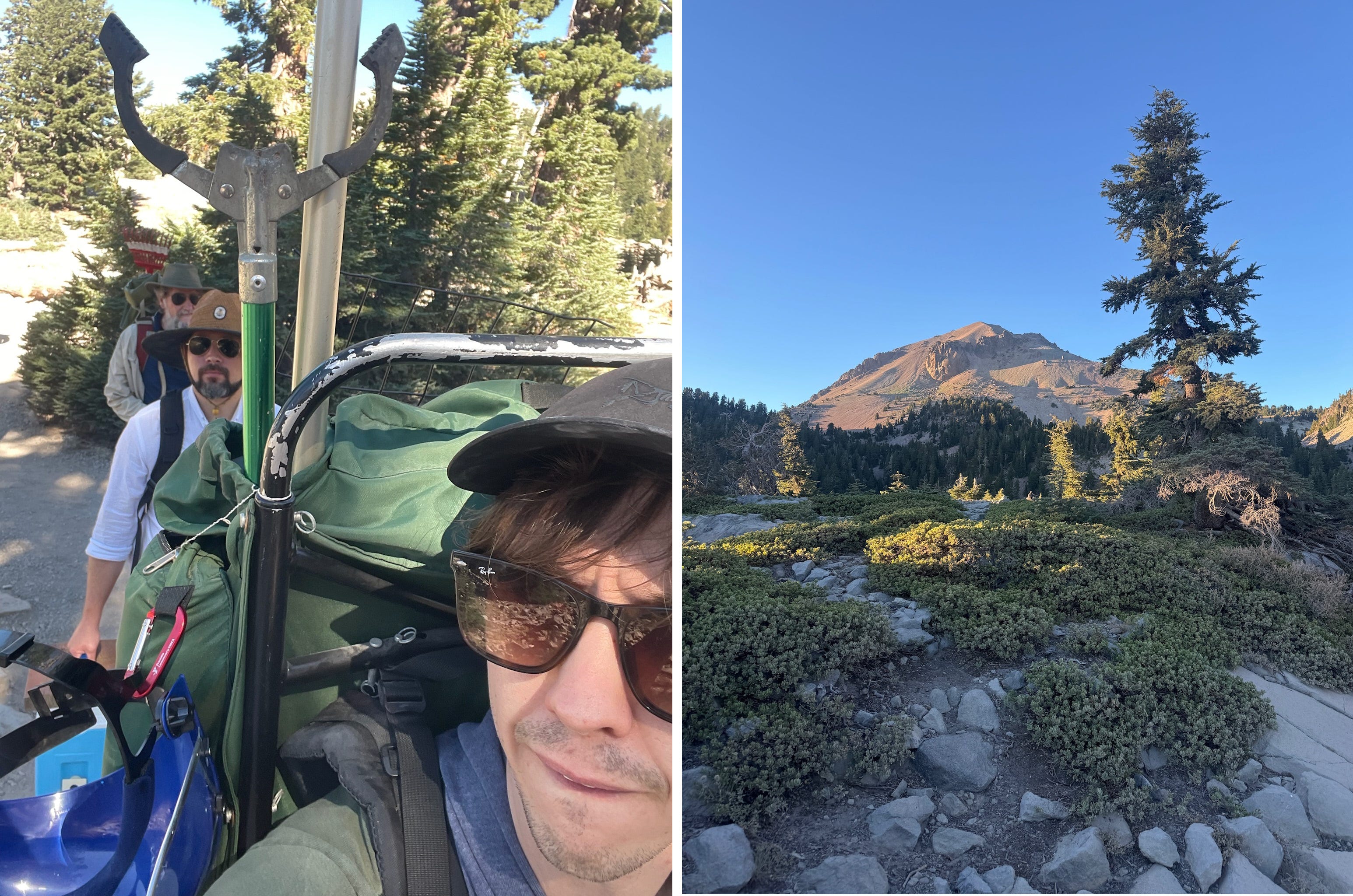
An early morning start found three Astrobiology amigos including yours truly, Oxford University research fellow Duhan Toparlak and UCSC/NASA researcher Rafael Delwart joined by Umbrella Films crew of Frauke Sandig and Eric Black. We donned heavy backpacks and hiked into the hydrothermal field beneath the majestic Lassen Peak, whose last eruptive episode ran from 1914 to 1917.
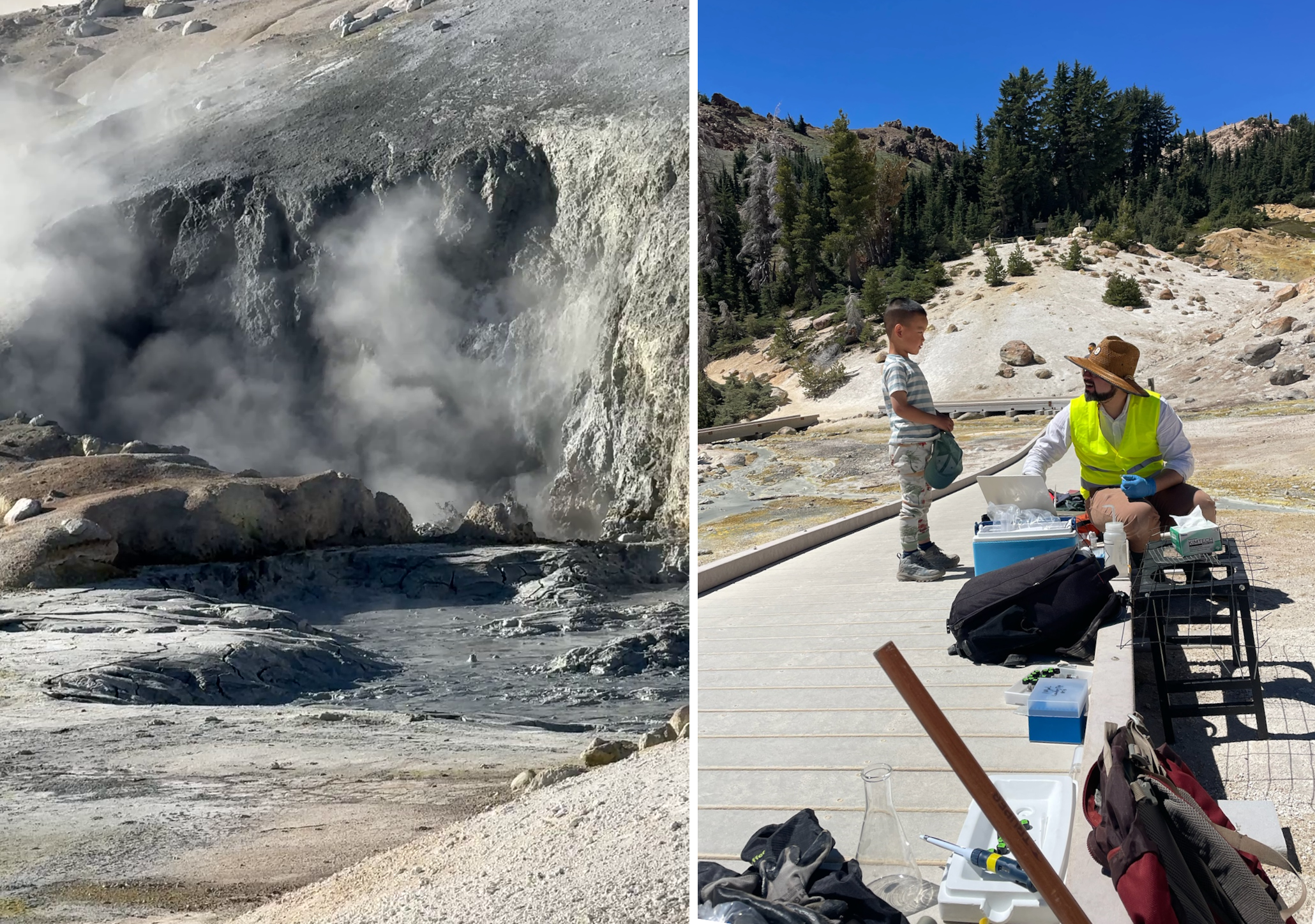
Bumpass Hell is a risky place to work. In 1865 Mr. Kendall Bumpass fell through the crust of surface minerals and scalded his leg so badly that it had to be amputated (he lived another three decades, 19th century people were tough!). Where would we find safe spots we could walk to sample waters and use the fumarole vent heat to make our chemistry go? Rangers from the Lassen Volcanic National Park told us that they never left the boardwalk built for visitors. In fact, when we arrived we found they had arranged for a crew of burly firefighters and emergency medical techs to be on standby if any one of us met the same fate as Mr. Bumpass.
I put all of that out of my mind as I stood on the boardwalk and began looking for old friends: the fumarole vents I had used for experiments back in 2016 captured in this segment of the marvelous documentary Living Universe. As is typical in volcanic hydrothermal environments, the layout had shifted. In fact, just a week before a huge new ‘big boiler’ had opened up with fumarolic gases blasting up through dark mud not far from where I had previously worked. This was now a no-go area and I was worried that this new opening would have lowered the gas pressure to the whole field, leaving us no accessible vents. Then something caught my eye: the sheen of steam emerging from the ground in two spots, one of them encrusted by pure, yellow native sulfur.
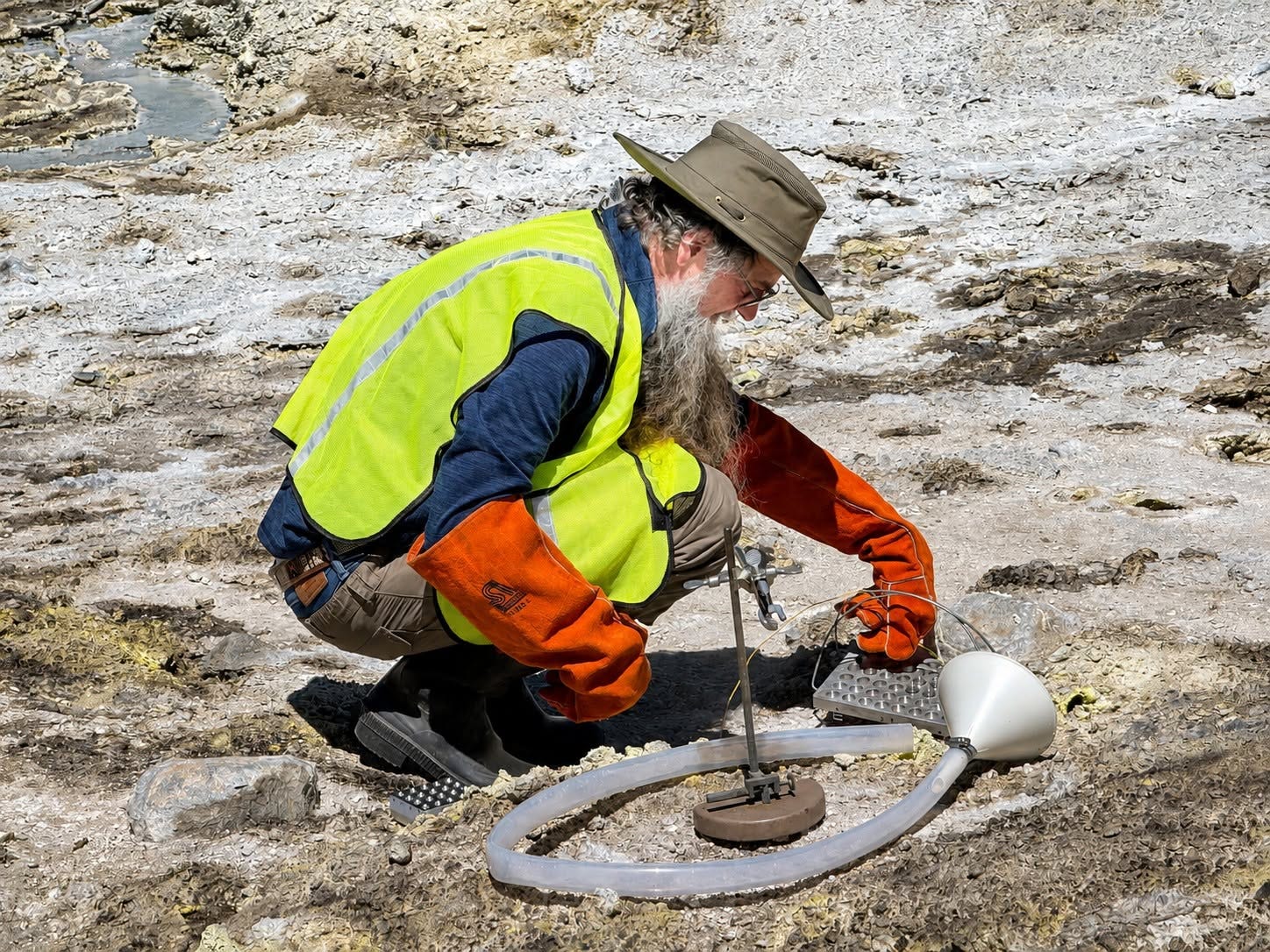
I donned my safety gear and let the crew know I was going to step off the boardwalk and test a route to these promising features. As my boots sunk into the crunchy mixture of kaolinite, opal and iron oxides, I could feel the heat. The ground was putting out quite an energy flux. This can be a warning sign as heat signifies boiling mud just below the surface. If the crust is thick enough it can carry the weight of a person, and potentially 2-3 of us as we needed to work together. Any cleft or hole was a warning sign however, and I trod carefully, keeping well away from them.
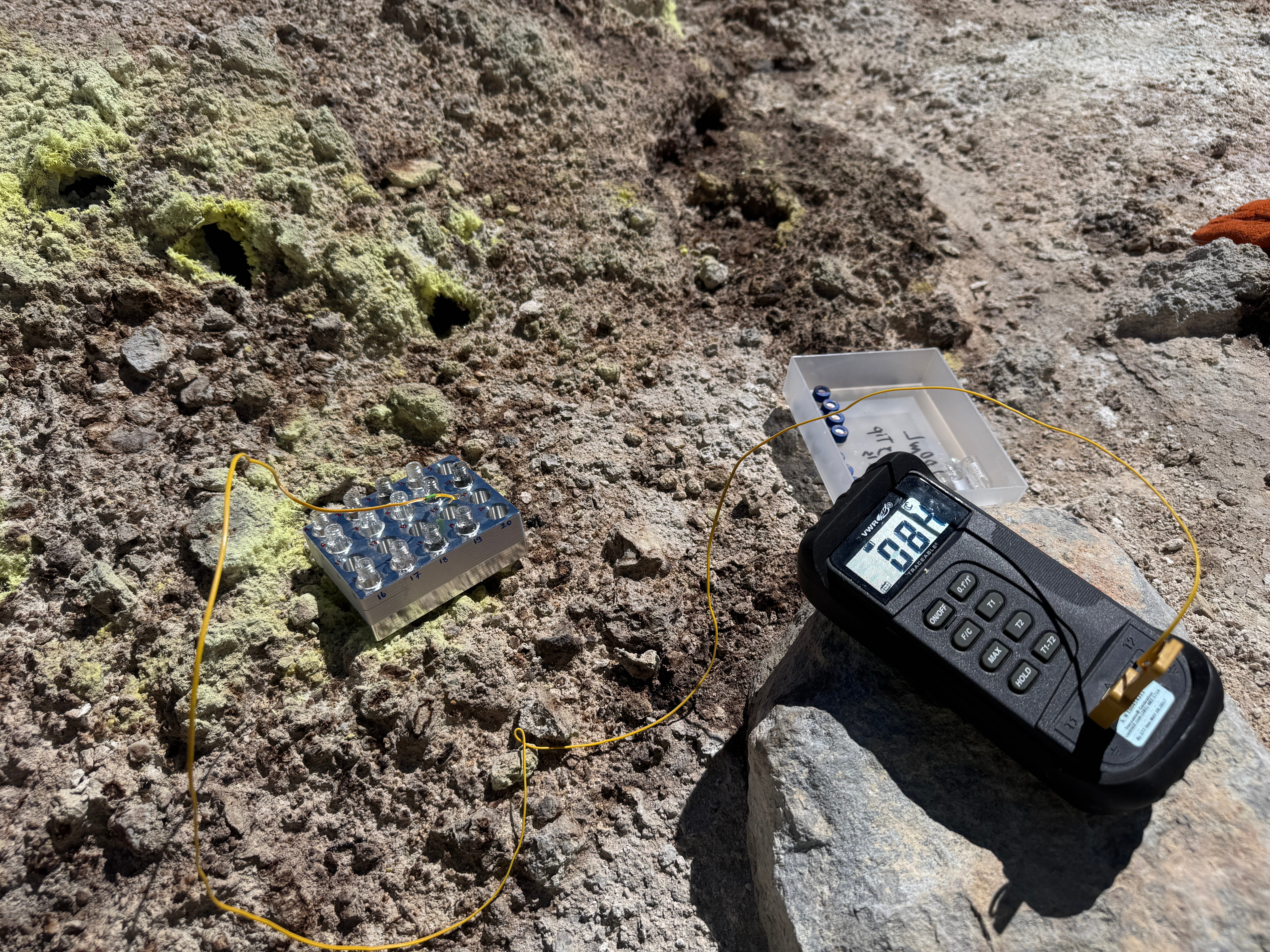
Reaching the target vent site, my nostrils were greeted by a wafting essence of rotten eggs, the veritable breath of the Earth. Carefully crouching down by the largest opening, I dropped in the sensor wire of my trusty thermistor and was pleased to see the numbers elevating fast, well beyond the 60 °C minimum threshold and into the 80s. Testing the other, sulfur-encrusted vent I found it was also similarly toasty. The ground beneath my boots exceeded 60 °C, causing me to have to shift position every minute or so.
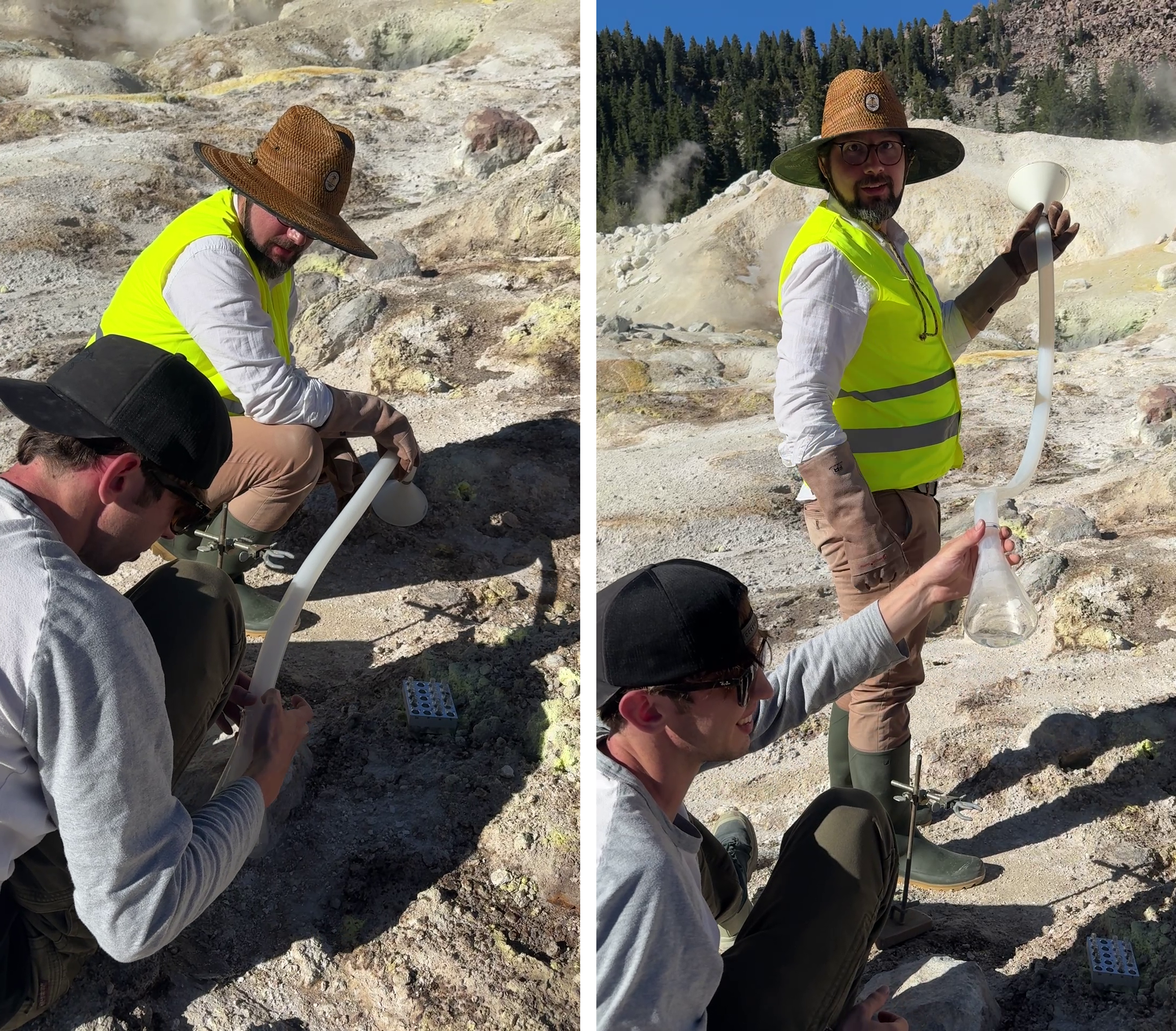
I hailed our team that we might have found ideal sites, and we were ready to set up the rig to sample the steamy gas. Having just returned from a space conference in the Azores, a Portuguese volcanic archipelago in the middle of the Atlantic, I had been given the design for gas sampling by colleagues at the university on São Miguel Island. They used a simple cone attached to a silicone tube. This is what we tried at the larger Bumpass vent. The gases were clearly captured, yet to our dismay the condensing droplets simply flowed back down the tube into the vent. Duhan and Rafael then tried and perfected a two-person technique: fill the tube with gas, hold it up high to let it cool, then the condensate will dribble down into a glass beaker. Ten minutes of this easily yielded 50 mL of condensate.
Filtered hot spring water and fumarole gas condensate in hand, we were ready to begin the experiments. Two aluminum heat blocks were set down directly over their respective vent openings. They quickly reached around 85 °C, heating the glass vials seated in individual wells. The tiny primordial soups were then hydrated with a drop or so of fluid. In the smaller block, Duhan had included mixtures of chemically activated mononucleotides and prebiotically plausible lipids to test rapid oligomerization reactions leading to higher-order structures. In our larger block, we had set up blends containing Murchison meteorite powder, Icelandic volcanic ash, and a control with just the basic mononucleotide + phospholipid mixture.
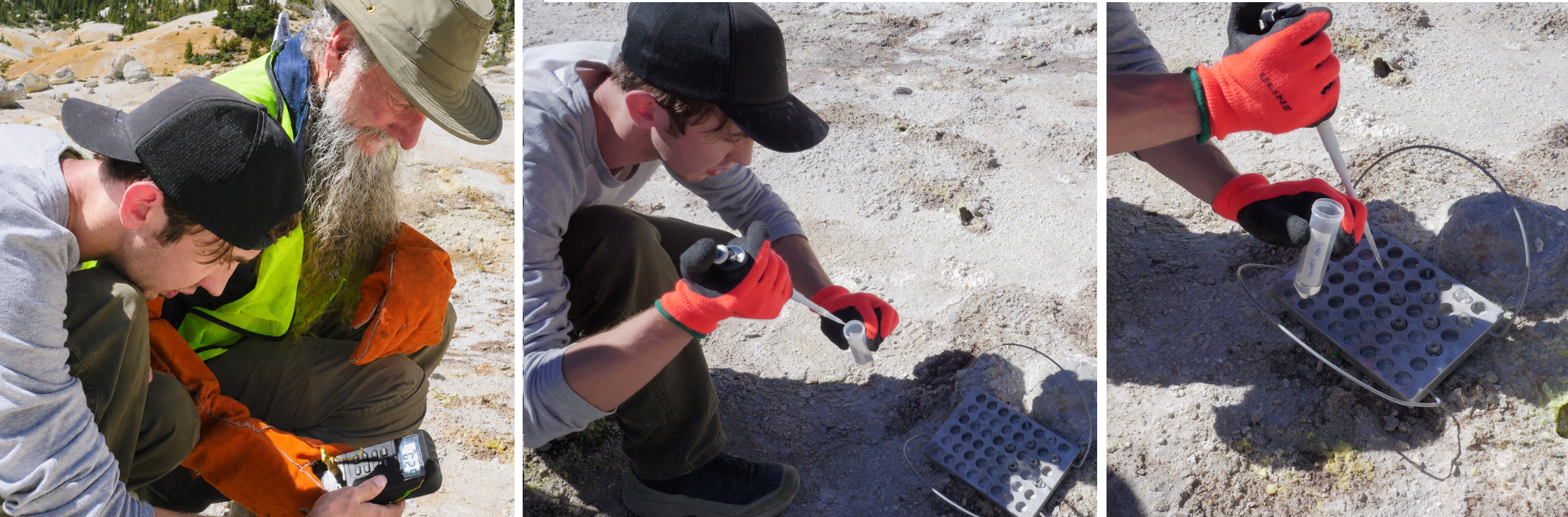
Over the next few hours, Rafael and Duhan dutifully carried out their hydration-rehydration cycles. From experience, we had observed that secondary condensation hangs around the tops of the vials and can flow back down. This is no problem, as it provides a small intermediate wetting cycle. Once the samples were fully dried, we waited 25 minutes to encourage a ‘shake ’n bake’ of molecules moving around between membrane layers in a nearly dry state. Productive syntheses and rare combinatorial encounters can happen between mostly dry lipid layers, as we suggested in OoL Part 1: A Progenitor for Life?
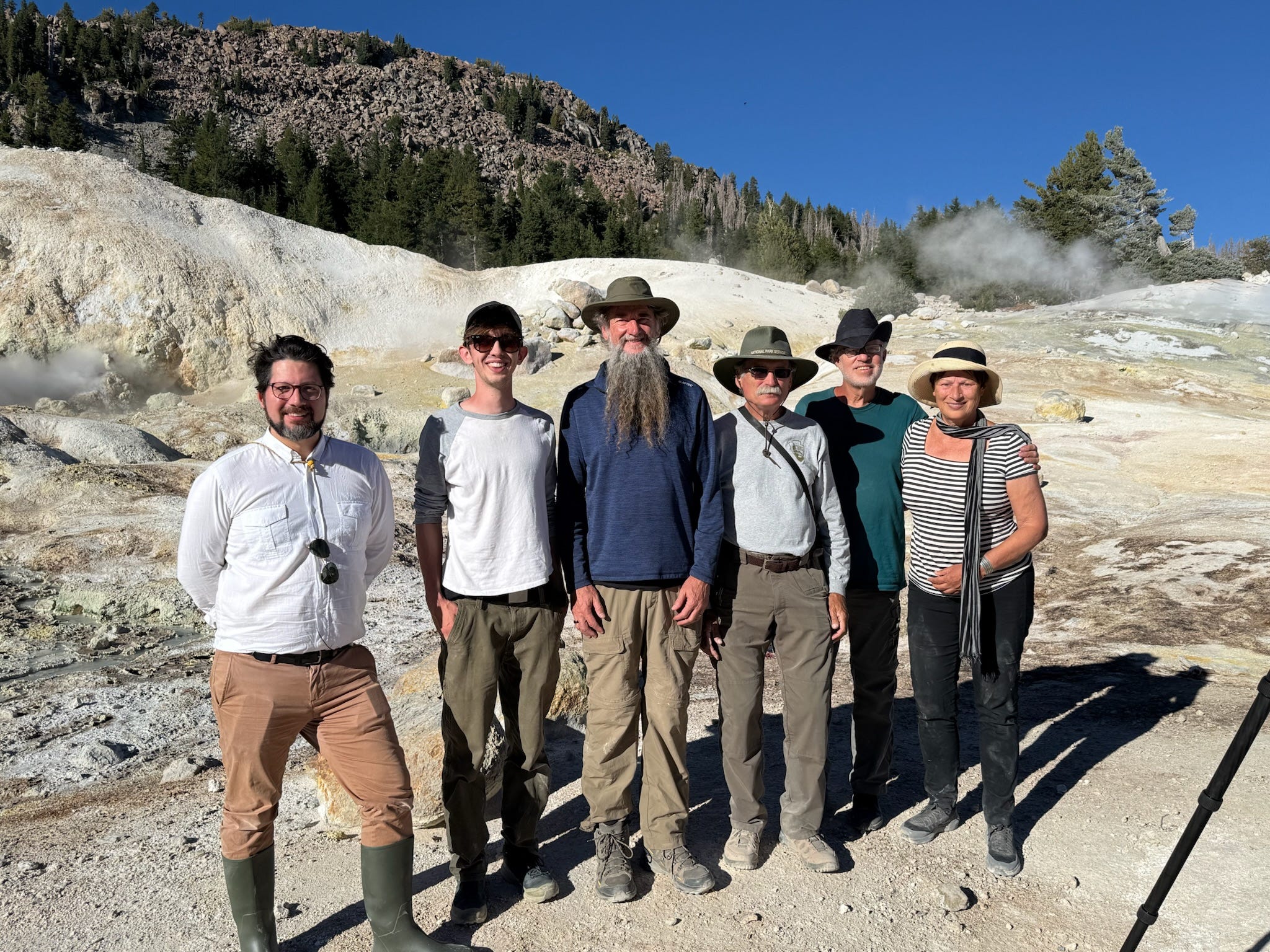
Seven hours later, the team was done. We retreated from the fumaroles, capped the vials and stowed the gear. The emergency team were relieved that no one ‘fell through’ and in regular check-ins they got a chance to really dive into our science. In fact they will all receive this report through the good graces of our gracious host, Ranger John “Hux” Huxley. Hux is on my left in the above team photo and next to him are Eric Black and Frauke Sandig, intrepid partners in Umbrella Films behind several previous highly regarded documentaries. They joined us at Bumpass Hell to shoot a segment of their next creation, to be aired on German public broadcasting and in the USA/worldwide in a couple of years. In fact, Eric and Frauke were a big part of the impetus to return to Bumpass Hell, so thank you both!
Now it’s belly-to-the-bench as we analyze our primordial soups, looking for compartments (vesicles) that just might contain self-assembled RNA from this first-of-its-kind experiment. Did a volcanic vent at Bumpass Hell actually help assemble the ingredients of a protocell? That is the story I’ll share next.
Meanwhile find below some more resources around our science. And if you are a researcher needing some tips on how to cook your own chemical soups on a version of Nature’s camp stove, feel free to get in touch!
Resources
The BIOTA Institute, the sponsor of this study has a growing collection of publications and media coverage.
Australian Broadcasting Corp’s compelling video about the famous Murchison meteorite and research into the origin of life carried out in hot springs in New Zealand.
A recent special collection of the journal Astrobiology covers the latest science around where life can start in OoL Part 2: An Origin of Life on Land.
Lastly, my list of diverse technical publications, and an extensive archive of podcasts/recorded pieces could be of interest.
Awesome sauce. Welcome back from Hell!
Wow that is great. Congratulations can’t wait for the updates.!!!